See More, Treat Better
At Long Lake Family Dentistry, we use state-of-the-art digital radiography to get the clearest possible picture of your oral health. Unlike traditional X-ray film, digital sensors capture images instantly, display them on a screen within seconds, and expose you to up to 90% less radiation — making them a safer and far more efficient diagnostic tool for patients of all ages.
📡 Why Digital Makes a Difference
Digital X-rays allow us to zoom in, enhance contrast, and measure structures with precision that film simply cannot match. We can detect cavities between teeth, bone loss around roots, infections, impacted teeth, and structural issues that are invisible to the naked eye — often years before they would become visible or symptomatic. Early detection means simpler, less invasive, and less costly treatment.
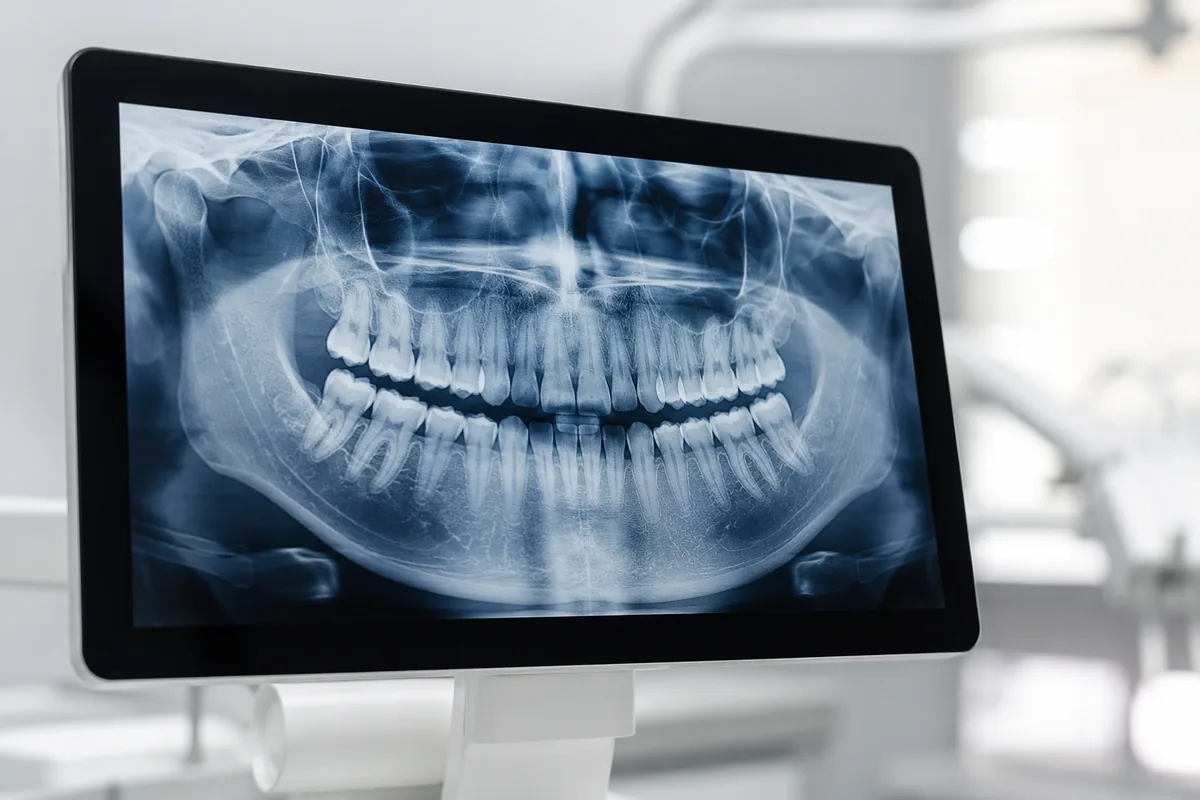
Digital X-rays are a standard part of your comprehensive dental exam and allow us to monitor your oral health over time. Images are stored securely in your patient record and can be compared side-by-side at future visits so we can track even subtle changes in your bone levels, tooth structure, and tissue health. If you're ever referred to a specialist, images can be transferred electronically in moments.
Types of Digital X-Rays We Use
Bitewing X-Rays
The most common type, taken during routine checkups. They show the upper and lower back teeth side-by-side and are excellent for detecting cavities between teeth, checking the fit of crowns, and monitoring bone levels between teeth.
Periapical X-Rays
Show the entire tooth from crown to root tip, including the surrounding bone. Used to examine teeth with symptoms, evaluate root canal treatment, or assess infection and bone loss around specific teeth.
Panoramic X-Rays
A single wide image that captures all your teeth, jaws, sinuses, and jaw joints in one shot. Ideal for evaluating wisdom teeth, planning implants, assessing jaw health, and getting a full overview of your oral anatomy.
Full-Mouth Series
A complete set of 14–21 images covering every tooth and its supporting structures. Typically taken for new patients or those who haven't had X-rays in several years to establish a full baseline of oral health.
What Digital X-Rays Can Detect
Cavities between teeth and under existing restorations
Early bone loss from gum disease or infection
Abscesses, cysts, and tumours in the jaw
Impacted or developing wisdom teeth
Fit and integrity of crowns, bridges, and implants
Root length and canal anatomy for treatment planning
What to Expect During Your X-Rays
Positioning
You'll be seated comfortably and a small digital sensor (slightly larger than a traditional film packet) will be placed in your mouth. A lead apron may be placed over your chest as an added precaution.
Quick Capture
Each image takes just a second to capture. Depending on the type of X-ray, the full series takes 5–15 minutes total. There's no development time — images appear on our monitor immediately.
Instant Review
We review your images with you on-screen right away. We can zoom in, adjust contrast, and point out areas of concern in real time so you understand exactly what we're seeing.
Diagnosis & Planning
Based on the images and your clinical exam, we'll discuss any findings and recommend a personalized treatment plan — or confirm that everything looks healthy and schedule your next routine visit.